

It changes how those hazards are structured, scored and communicated. And for local authorities, housing associations and compliance teams working across hundreds or thousands of homes, that creates a bigger operational question:
Can you apply the updated framework consistently across every property, inspector and team?
Because identifying a hazard is only part of the job. You also need to show what was found, how the risk was assessed, what evidence supported that decision and what happened next.
That is where HHSRS 2.0 becomes more than an inspection update.
It becomes a consistency challenge.
But the updated framework simplifies and modernises the way those risks are assessed.
One of the most visible changes is the move from 29 hazard profiles to 21 hazards, bringing related risks together and making the framework easier to navigate.
The scoring approach has also been made easier to understand. Assessors still consider the likelihood of harm occurring and the potential seriousness of that harm, but the updated framework introduces clearer High, Medium and Low risk bands in place of the previous A to J bands.
The principle is straightforward: the greater the likelihood and potential harm, the more serious the risk.
In practice, applying that judgement consistently across a large housing portfolio is where things get more complicated.
Every inspection, evidenced and audit-ready
Property Inspect timestamps every photo, comment and signoff against a tamper-evident record — the audit layer disputes need.
Are they following the same process? Are they capturing the same level of evidence? Are they assessing the risk in a consistent way? And six months later, could your team easily explain why each decision was made?
When inspection processes rely on different spreadsheets, forms, templates or individual working practices, small differences can quickly become larger gaps across a portfolio.
For housing providers, that makes standardisation increasingly important.
Teams need a repeatable inspection process that helps inspectors capture the right information in the right way, while still allowing trained professionals to exercise the judgement HHSRS requires.
That means moving beyond simply completing an inspection and creating a reliable record of the decision.
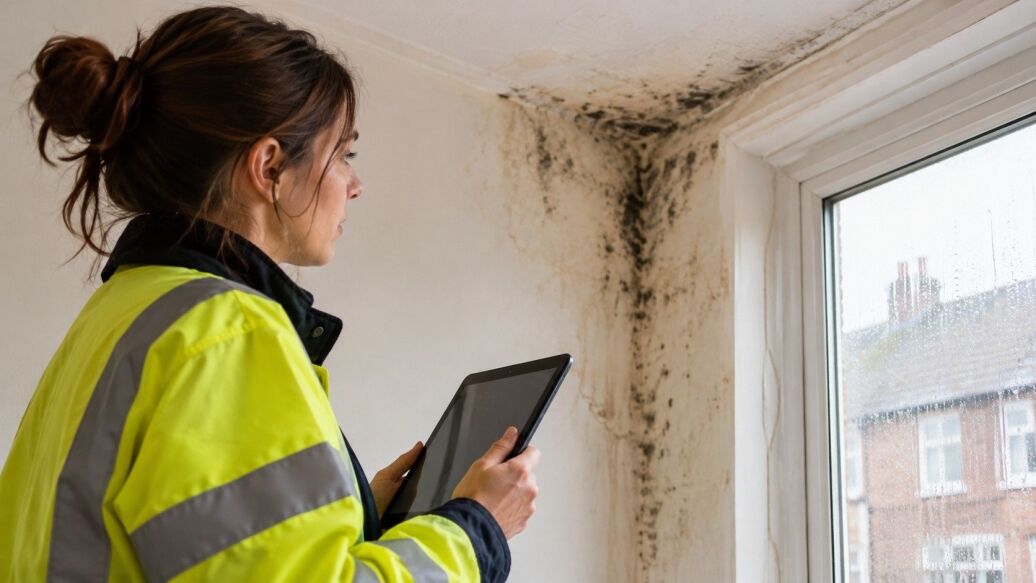
It can be closely connected with other housing conditions, including excess cold, poor ventilation and deficiencies within the property. More importantly, the consequences of failing to identify and respond appropriately to serious damp and mould issues are now well understood across the housing sector.
That makes good evidence particularly important.
Photographs, observations, locations, timestamps and assessment details help create a clearer picture of what was found at the time of an inspection.
Instead of a note simply saying "mould present", teams can build a structured record showing where it was found, its extent, the conditions surrounding it and the assessment that followed.
That context matters when deciding what needs to happen next.
If a hazard is questioned later, teams may need to understand:
- What was observed during the original inspection?
- What evidence was captured?
- How was the hazard assessed?
- Who completed or reviewed the assessment?
- Were changes made to the record?
- What follow-up activity took place?
When that information sits across emails, spreadsheets, photographs and separate systems, reconstructing the story can take time.
A clear audit trail makes that story much easier to follow.
Every inspection creates a record. Every photograph adds evidence. Every update adds context. Together, they provide a defensible history of what your organisation knew and what happened next.
HHSRS and Awaab's Law are separate frameworks with different purposes and requirements.
HHSRS provides the framework for assessing housing hazards and the level of risk they present.
Awaab's Law places specific duties and timeframes on social landlords for investigating and addressing hazards that meet its definitions.
Since October 2025, Phase 1 has applied to all emergency hazards and significant damp and mould hazards in social housing in England.
From 30th November 2026, Phase 2 extends the significant hazard requirements to further areas, including excess cold, excess heat, falls, structural collapse, fire and explosions, electrical hazards and domestic hygiene hazards.
So HHSRS can support risk assessment and professional judgement, but completing an HHSRS assessment does not, by itself, demonstrate compliance with every requirement under Awaab's Law.
For housing teams, the practical takeaway is simple: understand which requirement you are working to, then make sure your inspection, evidence and follow-up processes support it.
Our new HHSRS 2.0 inspection solution brings hazard identification, risk scoring and evidence capture together in one structured workflow, helping local authorities, housing associations and compliance teams standardise assessments across their housing portfolios.
Built around the updated 21-hazard framework, the solution enables inspectors to:
- Find it. Identify housing hazards and capture their location, condition, photographs and supporting evidence.
- Score it. Apply the revised HHSRS methodology, with built-in calculations using likelihood and harm to determine hazard scores and risk bands.
- Record it. Generate structured HHSRS reports and maintain a timestamped record of inspection findings and activity.
For organisations managing hundreds or thousands of properties, this means a more consistent approach to assessments across different inspectors, teams and locations.
Rather than relying on disconnected spreadsheets, manual calculations and separate reporting processes, Property Inspect brings the essential elements of an HHSRS assessment into one place.
The result is a clearer, more repeatable inspection process that supports professional judgement, improves visibility and helps organisations maintain reliable, defensible records.

That's why we've also launched hhsrs.com, a dedicated resource hub designed to help housing and property professionals navigate HHSRS 2.0 with confidence.
The platform brings together practical guidance and resources to help organisations understand the revised framework and what it means for their inspection processes.
Through hhsrs.com, you can:
- Explore the 21 hazards: Understand the updated hazard categories and the risks they cover.
- Understand the scoring methodology: Learn how likelihood, harm and the revised risk bands work together.
- Access practical guidance: Explore resources to support your understanding of HHSRS 2.0 and its application to housing inspections.
- Discover Property Inspect's HHSRS solution: See how our dedicated inspection tools help housing teams assess, document and report on hazards consistently.
Whether you're reviewing existing inspection procedures, preparing your teams for the updated framework or looking to improve consistency across your housing portfolio, hhsrs.com provides a starting point.
HHSRS 2.0 is more than a change to the assessment framework. It's an opportunity to strengthen how housing risks are identified, assessed and recorded.
With Property Inspect's dedicated HHSRS 2.0 solution and the resources available through hhsrs.com, your organisation can take a more structured approach to housing risk management.
Ready to see how it works?
Explore the new framework at hhsrs.com or book a demo with Property Inspect to discover how our HHSRS 2.0 inspection solution can support your organisation.


