

Insights for property inspection teams
Guides, updates and practical advice across inspections, reporting, compliance and property operations.
Built for property managers, facility managers, housing providers, surveyors and specialist inspectors.
Start with our most useful content
The latest pinned or newest post from each topic area.
 Inspections
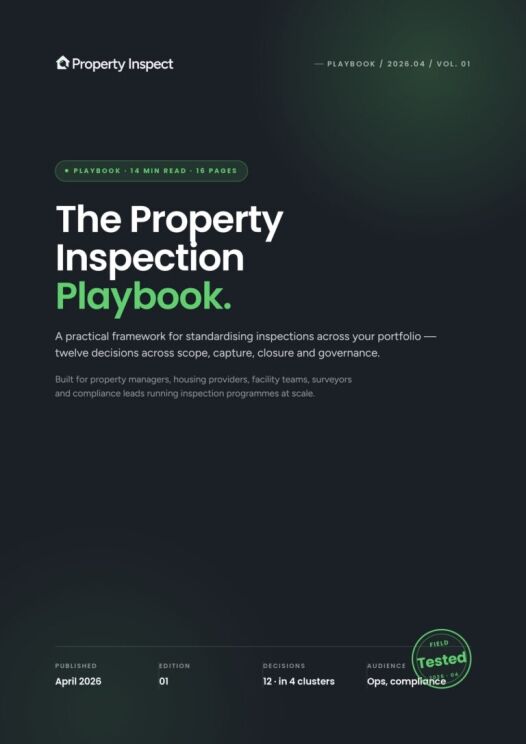
 The Property Inspection Playbook: building a defensible, repeatable process
A practical framework for standardising inspections across a property portfolio — what to capture, how to structure your evidence, and the audit trail you will need when questions come up months later.
 Compliance
 Assess, Prioritise, Act: Managing Building Risk Under Section 83
Ensure your building's safety with regular health checks under Section 83 of the Building Safety Act 2022. Property Inspect offers tools for efficient risk assessment, prioritising safety and compliance, and transforming mandatory duties into seamless processes.
 Property Management
 UK Mortgage Market Heats Up: Rate Cuts, Looser Rules, and More Low-Deposit Options for Buyers
In a notable turn for the UK housing market, several major lenders are igniting a mortgage price war, cutting rates and loosening…
 Facility Management
 A guide to the 4 asset lifecycle management stages
Understanding asset lifecycle management is crucial for optimal asset management. In this blog, we'll explaing the four asset lifecycle stages.
 Housing
 Build to Rent Isn’t Slowing Down. But the Real Challenge Is What Happens Next
Build to Rent in the UK is booming, with completions and investment rising fast. But as portfolios scale, the real challenge is keeping service, maintenance, inspections, and compliance consistently high - because long-term value depends on operational discipline, not headlines.
 Hospitality
 How to Manage Fast Food Safety Standards
The risks of poor hygiene in restaurants are numerous and can be highly damaging to even the most established businesses. Regular maintenance…
Survey & Valuation How to Read A Home Inspection Report
Romo, Lorena "Lost in Translation: How to Read Your Home Inspection Report", Inspection Support Network, Thu, Jun 17, 2021, original source hereIf…
Reporting & Templates Free Inspection Checklists (2023)
If you’re managing residential or commercial properties, inspections are a vital part of that. Here are some free inspection checklists to use.
Product Updates Property Inspect Achieves SOC 2 and Cyber Essentials Plus
Radweb Ltd has achieved SOC 2 and Cyber Essentials Plus for Property Inspect, independently validating security controls across access, encryption, secure development, monitoring, incident response and governance.
Explore by subject
Filter the feed below by the area you care about.
Latest insights and updates
 Housing
 Why New-Build Buyers Are Taking Longer to Commit in 2026
Property Inspect’s Q1 2026 data shows Britain’s new-build market remains resilient, but buyers are increasingly selective, with demand softening and confidence, value, and quality driving decisions.
 Compliance
 Building Assessment Certificates: Preparing for Regulator Assessment
Building Assessment Certificates are the new gatekeeper for higher-risk buildings in England. If your safety case, resident engagement strategy, and audit trail aren’t ready before the 28‑day clock starts, your BAC application—and lawful occupation—could be at risk.
Compliance Putting Residents First: How to Keep Everyone in the Loop About Safety
Discover how effective resident engagement transforms high-rise safety from a compliance task to a community partnership. Learn strategies to involve residents as active safety partners, leveraging digital tools and fostering trust for safer, happier living environments.
Compliance What’s a Safety Case Report and Why Should You Care?
Transform your Safety Case Report from a compliance chore into a strategic asset. Demonstrate proactive risk management, ensure inspections run smoothly, and boost resident confidence. Stay ahead with a well-maintained report that meets the Building Safety Act 2022 requirements. Don't wait for enforcement; make your report dynamic and live today.
 Inspections
 How to Choose the Right Commercial Property Inspection Software.
Choosing the right inspection software for your commercial portfolio, is not about comparing features. It is about reducing operational risk,…
 Compliance
 AB 2801 Is Live: Why Property Inspections Just Became a Legal Risk
If you're still using pen-and-paper move-out checklists, you're already out of compliance. In 2025, California enacted Assembly Bill 2801, a…
 Property Management
 How Can Property Managers Save Time and Stay Compliant?
Managing multiple properties is a demanding task, especially when juggling inspections, documentation, compliance, and tenant communication. Property Inspect’s inspection software…
 Compliance
 Balancing Legal Mandates and Property Rights: The Case for Proactive Rental Inspections
The recent federal court decision in Syracuse, New York, which upheld the city’s mandate for rental property inspections, underscores the…
 Property Management
 Trends Shaping the UK Build-to-Rent Sector in 2025
The UK residential Build-to-Rent (BTR) sector has emerged as a key solution to one of the country’s most persistent challenges:…
Housing Streamlining Compliance and Inspections in Affordable Housing with Technology
The affordable housing crisis in the U.S. has reached critical levels. Millions of Americans struggle to find safe, stable, and…
 Inspections
 Elevators, Inspections, and More
Americans take 18 billion trips on elevators each year, and travel 2.55 billion miles on elevators and escalators each year,…
 Property Management
 Why Property Management System Integrations are Key to Running an Effective Business
Today’s competitive real estate environment requires innovative, forward-thinking property management strategies. It’s no longer enough to have an impressive website…
 Housing
 Navigating the Complexities of Senior Living: Compliance and Inspection Challenges in an Aging America
As the U.S. population ages, the senior living industry is bracing for an unprecedented surge in demand. By 2030, it's…
 Product Updates
 Cushman & Wakefield partners with Property Inspect to manage compliance across its largest real estate assets
The partnership with its Asset Management Team in Ireland is enhancing compliance management across its major real estate assets, bringing…
Property Management The Commercial Impact of Property Software Integrations
Managing any property involves numerous checklists, tasks, reports and knowledge of evolving legislation and licensing. It can feel like you…
Inspections 5 powerful features every commercial property inspection software should have
In the high-stakes world of commercial property management, the responsibility to nurture a safe and secure environment is always a…
Facility Management The Digital Transformation Journey: How to Boost People, Processes and Performance
Property Inspect integration partner MRI Software has released its digital transformation journey report. Here is what you need to know.
 Property Management
 The 6 Best Commercial Property Management Software (2023)
As the the workload of property managers increases, many are looking to commercial property management software to gain some precious time back to focus on the things that matter.
Housing Affordable Housing in the US: Are you ready for NSPIRE?
The NSPIRE framework has now been officially launched. Learn about Property Inspect's drive to make affordable housing safer for all.
Housing What’s behind the decline of affordable housing in the US?
With large numbers of people facing financial struggles, there has been an inevitable rise in demand for the affordable housing. But why is it so difficult to house the US' lowest earners?
Housing NSPIRE: HUD Issues Standards to Enhance Safety and Inspections in Assisted and Insured Housing
In an effort to prioritize the health and safety of residents, the U.S. Department of Housing and Urban Development (HUD) has announced the release of the Final Inspection Standards Notice for NSPIRE.
Facility Management What is Asset Management and What Does an Asset Manager Do?
Asset management, like facilities management, is an evolving field. Here we take a look at the role and responsiblities of an asset manager and the tech making their work smarter.
Housing How Will HUD Improve the Quality of US Affordable Housing with NSPIRE?
Earlier this year, HUD proposed an update to NSPIRE to improve the conditions of affordable housing. What are the proposed changes and what do they mean for residents across the US?
Property Management What is Block Management? A Complete Guide
Block management is an important role in residential real estate, but what is it and what do block managers actually do?
Product Updates Property Inspect Launches Integration With PointClickCare, Streamlining Senior Housing Compliance Inspections
Partnership to better enable the long-term health of senior care residents and the facilities they live in. CHICAGO, 30th March…
Housing What is multifamily housing and what are the benefits?
When you think of housing, single-family homes probably come to mind first. However, one type of housing often overlooked is…
Product Updates Putting the Success in Customer Success: Alet Drijfhout, Property Inspect
In this interview, Alet shares her secrets for customer success and explains how Property Inspect continually manages to exceed the expectations of its clients.
Housing Improving Affordable Housing Standards in the United States
HUD provides affordable housing for low-income families and individuals through a number of programs, but there is a drastic shortage of units at present.
Product Updates International Women’s Day 2023: Adelle Naidoo
In the lead up to International Women’s Day 2023, join us as we celebrate the innovative women working in proptech!
Product Updates International Women’s Day 2023: Angelique Matthews
In the lead up to International Women’s Day 2023, join us as we celebrate the innovative women working in proptech!
Product Updates International Women’s Day 2023: Sharon Thebe
In the lead up to International Women’s Day 2023, join us as we celebrate the innovative women working in proptech!
Product Updates International Women’s Day 2023: Alet Drijfhout
In the lead up to International Women’s Day 2023, join us as we celebrate the innovative women working in proptech!
Housing Streamlining Senior Housing Safety and Compliance
Although there are challenges, there are plenty of opportunities for innovation in senior housing in the years ahead.
Property Management Property Management: Streamlining Operations for Meaningful Change
Technology adoption is high on the agenda for property managers, showing promising signs for an industry dominated by paper-based processes.
Housing The 2022 HUD Report on Homelessness in America
In December, The U.S. Department of Housing and Urban Development (HUD) released part one of its 2022 Annual Homeless Assessment…
Product Updates Property Inspect partners with King County Regional Homelessness Authority to end homelessness in the Greater Seattle region
The independent agency will leverage Property Inspect’s platform to assist with its federally-funded Housing Choice Voucher (HCV) program and Housing…
Property Management What is a mixed-use development?
Mixed-use has become a popular term in development and real estate over the years, in fact they are one of…
Product Updates Property Inspect Advent Calendar 2022 – Your Definitive Guide to New Features, Tools & Updates
We've been continually listening to your feedback throughout 2022 so we can help you improve your processes and experience of…
Product Updates Property Inspect joins MRI Software’s Partner Connect program
The partnership with MRI Software will enable operational change and improve efficiency in the property industry Property Inspect, a leading,…
Product Updates Property Inspect partners with WiredScore to become an Accredited Solution supplier
The accreditation enables Property Inspect to deliver its leading property inspection solution to WiredScore’s global client base of landlords and…
Facility Management What is smart building certification?
Studies show that the number of smart buildings across the world will grow from 45 million this year to 115…
Property Management What is the Average Property Manager Salary in the US?
Property managers are essential in the real estate industry, supporting other property professionals and residents with a number of duties…
Housing How proptech drives digital transformation in multifamily real estate
New technologies continue to disrupt real estate industries the length and breadth of the globe, including the multifamily sector. In…
Hospitality How Host Inspections are Airbnb’s Secret to Success
Host InspectionsIn 2007, Brian Chesky devised an ingenious way to rent his San Francisco apartment, offering three airbeds, breakfast, a…
Inspections What is a Commercial Building Inspection and What Do Inspectors Look For?
Commercial building inspections are more important than you think. They’re not just for new construction projects, either. A commercial building…
Product Updates Property Inspect launches in Europe through Polish Agency for Enterprise Development (PARP), to drive digital transformation in real estate
After a hugely successful year, Property Inspect continues to widen its global reach through Re_source Poland Prize, incorporating in Poland…
Housing The multifamily market: An overview of the industry, risk factors and recent trends
The multifamily market has enjoyed a period of significant growth over the past few years. With the increasing demand from…
Hospitality White Paper: The Trends and Tech Driving Hospitality
This Spring, we're excited to announce the publication of our white paper, titled "The Trends and Tech Driving Hospitality". In…
 Inspections
 How to make multi-family property inspections smarter and more efficient
In recent years, property inspection and operations software has become a much-needed tool in every property manager’s tech stack. A…
Product Updates Sustainability in Business & the Greenest Places to Work – UK & US
A study by intranet company Unily in 2020 revealed that 72% of workers were concerned about the environmental ethics of…
Product Updates The Ultimate Guide to Property Inspect’s New Features for 2022
Over the past year, our team of dedicated developers at Property Inspect have been working tirelessly to deliver a whole…
Hospitality The Importance of Food Hygiene Standards
Food hygiene standards are vital for monitoring the health and safety practices of most retail organisations and have uses beyond…
Hospitality 5 Ways to Improve the Hotel Guest Experience
It’s undeniable, the ideal benchmark for any hotel is not only meeting your guests’ expectations but exceeding them. The hospitality…
 Compliance
 Lessons Learned from the Miami Condo Collapse, Six Months On
Earlier this year in late June, a 12-storey oceanfront condominium in Florida collapsed in the early hours of the morning,…
Facility Management Raising the Bar in Facilities Management
Over the years, facilities management has faced its share of scrutiny. Of the countless arguments levied against it, not being…
Facility Management Top Facility Management Software Features
No matter your industry or business, it is essential that maintenance of your equipment and buildings is carried out efficiently…
Facility Management How to digitise maintenance smarter and more efficiently
There’s been a lot of talk around industry 4.0 of late, casting a spotlight on digital transformation and the need…
Product Updates Property Inspect continues rapid global expansion, recruiting in three key areas to further strengthen the team
After a successful period of worldwide growth for Property Inspect, it now looks to further strengthen its reach and reputation…
Reporting & Templates FREE Commercial Pest Inspection Checklist
If you own or operate a business in the hospitality industry, controlling and managing pests is of utmost importance. As…
Inspections What Can Property Inspectors Learn from the Miami Condo Collapse?
Warrick Swift, Commercial Director at Property Inspect, looks at the causes of the Miami condo collapse, what property professionals can…
Product Updates Property Inspect Automates HUD’s Housing Quality Standards (HQS) Reporting Processes for US Municipalities.
Global property inspection software Property Inspect partners with Arlington County VA to automate housing quality standards inspection reports (HQS) to…
Inspections Why You Need to Update Your Property Inspection Software in 2021
As everyone in the real estate industry knows, whether we like it or not, property management is notoriously heavy in…
 Property Management
 Have Rents Stagnated or Grown During the Pandemic – A US Perspective
The COVID-19 pandemic affected performance across all sectors in 2020 - and the rental market was no exception. Overall, 2020…
 Property Management
 Proptech Canada: Real Estate Market has the fastest Growth of the G7
Canada has seen some of the fastest growing sectors for real estate technology & innovation and is becoming more prominent…
Reporting & Templates Property Inspect – Introduction to Property Reporting
We love software here at Property Inspect. More importantly, we love connecting with property professionals and helping them achieve more…
 Product Updates
 Second Century Ventures Announces Property Inspect as REACH UK Proptech Program Member
Radweb; developers of the renowned global property inspection software platform, Property Inspect, are proud to be confirmed as an inaugural…
 Product Updates
 Announcing Property Inspect ‘Live Inspections’… Remote Property Inspections from your Desktop
As COVID-19 continues to pose challenging conditions for the entire property industry and with restrictions likely to be in place…
Reporting & Templates Your Safety Checklist
As a landlord or property manager, you've got to ensure your tenants’ safety at all times. When you're doing your…
 Compliance
 Legionnaires’ Disease: Take the Proper Precautions
As reported by the Buffalo News, Legionnaires' disease is making a comeback (http://buffalonews.com/2016/10/26/second-legionnaires-death-reported-niagara-county/). This deadly illness has been linked to…
Property Management 4 Things to Know Before Your Rental Remodel
Whether you're remodeling your rental property unit to increase its value or because it's outdated and needs repair, planning ahead…
Compliance Keep an Eye out for Fire Hazards in Your Properties
A fire in your property will cost you financially and may have tragic consequences for your residents and tenants. While…
Property Management Security Deposits: A Quick Deduction Guide
As a property manager or landlord, there has or will probably come a time when you'll have to deal with…
Reporting & Templates The 360 degree Tenant Inspection Checklist
Tenant inspections are a vital part of any solid plan to keep a property in good condition. Bad tenants can…
Reporting & Templates The Landlord’s Quick 4 Inspection List
As a landlord, you may not always have the time or access to conduct a thorough inspection of your rental…
Inspections Are You Carrying Out Digital Inspections Yet?
Despite the increasing popularity of software, apps and other electronic ways of doing things, some people are still carrying out…
 Compliance
 CO Detectors – The Dos and Don’ts
All fuel-burning appliances in your property produce carbon monoxide (CO), including gas furnaces. Normally, the gas is carried out of…
 Inspections
 Crucial Inspections for All Real Estate Investors
Just like novice home buyers do not always understand the importance of pre-purchase home inspections, many novice investors think they…
Property Management Keeping Your Brick Beautiful
Brick is a timeless look. It's also durable and can even increase the resale value of a property. With normal…
Property Management Move-in and Move-out Inspections are both important
Real estate investors and property managers must conduct periodic inspections of their properties. Surprisingly, many property owners do not take…
Survey & Valuation The Pre-Listing Inspection – Know What You’ve Got Before You Sell
Everyone knows you've got to inspect a property when you're a buyer. After all, no one wants to be the…
Survey & Valuation 3 Pre-Purchase Inspection Missteps to Avoid
Finding and locking the perfect property at the right price is a great feeling. The seller has taken your offer,…
Compliance 4 Vital Smoke Alarm Safety Tips
Smoke alarms save lives in your properties. The National Fire Protection Association says that having properly installed and working smoke…
Property Management 4 Common Legal Mistakes Landlords Make
As a landlord, you're bound by state, local and even federal laws. Not following those rules could land you in…
Tenant Essentials – Two Things To Tell Tenants Today
There are certain commonplace things you probably think you'll never have to tell your tenant, but you'd be surprised at…
Should You Upgrade To Tankless Water Heaters?
Tankless water heaters have been getting a lot of attention lately. Whether you're a landlord trying to save some money…
Master The Art Of Renting Real Estate With These Four Tips
As a current or prospective landlord, you probably think you've got everything figured out. The truth is that rental real…
The 3 Most Common Inspection Mistakes
No one is perfect, whether they are experienced professionals or seasoned novices. While messing up once in a while is…
App Update v4.5 Release Notes
Announcing the latest update to our Mobile and Tablet App for iOS and Android. v4.5 is now live on the App…
The Property Manager’s Guide to Keeping Good Tenants
As a residential or commercial property manager, your success is partly measured by your ability in keeping good tenants in…
The Landlord’s Indispensable Fall Maintenance Checklist
Good maintenance keeps your tenants happy in your rental homes. It also might just make the difference between things running…
Legionella Risk Assessment: What You Need to Know
Legionella bacteria can cause Legionnaires' Disease, a serious condition that has symptoms similar to pneumonia and has the potential to…
Buyer Options After Dealing with Home Inspection Findings
The home inspector provides an objective opinion about a property, regardless of what has been agreed to in the contract.…
The Top 5 Characteristics of Successful Landlords
On the surface, owning rental properties looks like an easy way to make money to people who are not aware…
Simple ways to attract the best tenants
If you ask any former landlord to identify the worst part about owning rental properties, their answer is likely to…
Pre-sale Inspections Can Pay Off
Many novice buyers try to save a little money by skipping home inspections when purchasing a property. This typically ends…
The Top 4 Neglected Property Inspection Types
For apartment owners and property managers, property inspections are crucial. There are four basic types: the move-in inspection, the move-out…
The importance of Radon Testing
Radon is considered the number one cause of lung cancer for non-smokers and the second leading cause of lung cancer…
Inspecting a HVAC system is a crucial part of property inspections
The HVAC system is perhaps the most vital system in any residence. More than half of all residential energy costs…
Improving Periodic Inspections Of A Tenant-Occupied Property
Owners of rental properties have many responsibilities. The periodic inspection of tenant-occupied residences is of primary importance. There are many…
Have You Done A Maintenance Inspection Lately?
All too often, in-depth property inspections are considered something you do only when buying or selling real estate. The time…
How Property Inspect reduces tenancy deposit disputes
Property Inspect is the most comprehensive property inspection platform on the market. It's used by thousands of property professionals around the…
Property Management Tenant Complaints: Turn the Tide in Your Favor
Whether you're a landlord or a property manager, one of the most difficult yet rewarding parts of your role is…
Property Inspect Launches New Mobile/Tablet App for iOS and Android
We spent over a year building and perfecting the newest version of our App, using the latest cutting edge technologies and quickly…
Say Hello to Property Inspect, a Revolution in Property Inspection Software
Launching in 2015, Property Inspect is a new multi functional inspection app, that makes creating, recalling and comparing property inspection reports faster…
Most read by property teams
The articles our readers come back to most — proven, referenced and kept current.
Build to Rent Isn’t Slowing Down. But the Real Challenge Is What Happens Next
Build to Rent in the UK is booming, with completions and investment rising fast. But as portfolios scale, the real challenge is keeping service, maintenance, inspections, and compliance consistently high - because long-term value depends on operational discipline, not headlines.
Read article →Why New-Build Buyers Are Taking Longer to Commit in 2026
Property Inspect’s Q1 2026 data shows Britain’s new-build market remains resilient, but buyers are increasingly selective, with demand softening and confidence, value, and quality driving decisions.
Read article →The Property Inspection Playbook: building a defensible, repeatable process
A practical framework for standardising inspections across a property portfolio — what to capture, how to structure your evidence, and the audit trail you will need when questions come up months later.
Read article →Looking for step-by-step guidance?
Access detailed guides, setup instructions and product documentation in our help centre.
See how reports look in practice
Explore real examples of inspection reports — structure, evidence and summaries.
See how Property Inspect works in practice
Explore how inspections, reporting and compliance are managed in one system.